- Get 50% OFF Your First Consultation – Limited Time Offer!

Quick Summary :- A website can look perfectly fine to visitors while SEO problems develop in the background. Regular SEO audits help identify technical issues, outdated content, broken links, indexing problems, weak on-page optimization and changes in search intent. Making SEO audits part of ongoing website maintenance can help businesses keep their websites organized, relevant and aligned with long-term organic growth.
A website can look perfectly fine to a visitor and still have SEO problems working in the background. A page may stop being indexed, an internal link can point to an old URL, a website update can change headings or metadata, or useful content can become outdated.
That is why SEO should not be treated as a one-time task. Regular SEO audits give businesses a practical way to review what is working, identify technical and content issues, and keep their website aligned with search intent.
In this guide, Agyle Studio explains what an SEO audit should cover, why ongoing maintenance matters, and how businesses in Chandigarh, Mohali, Panchkula and Zirakpur can approach website SEO more consistently.
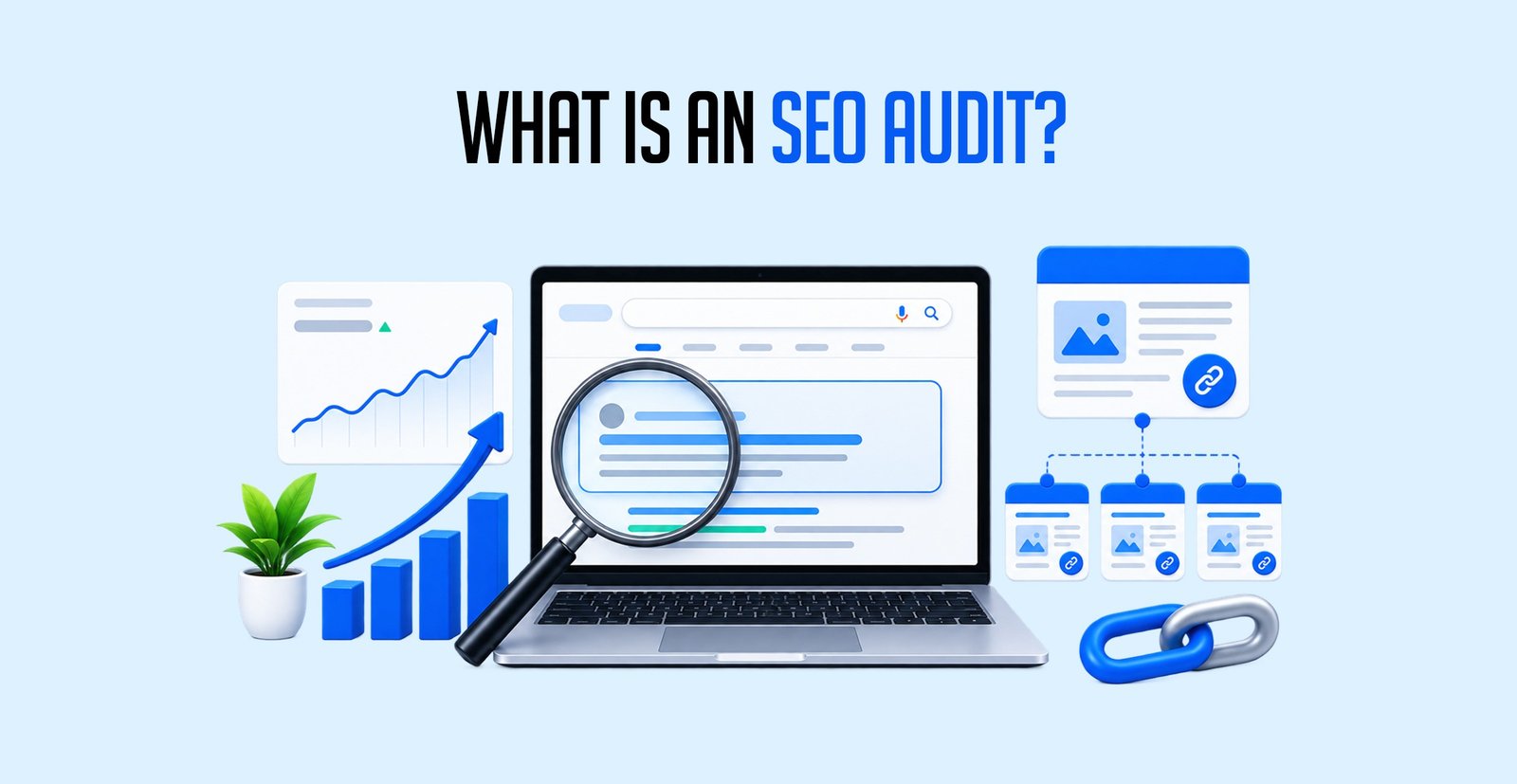
An SEO audit is a structured review of a website's search-engine-facing elements. Instead of looking at only rankings or keywords, a useful audit considers the wider picture: technical setup, indexability, site structure, page-level optimization, content quality, internal linking and user-facing issues that can affect organic visibility.
The purpose is not simply to produce a long list of errors. A good audit should explain which problems matter, why they matter and what should be prioritized first.
For a business owner, the recommendations should connect back to practical goals such as visibility, qualified traffic, enquiries or conversions.
Tips: Don't judge an SEO audit by the number of errors it reports. A useful audit should prioritize issues according to their actual impact on important pages, search visibility and business goals.
Websites are living digital assets. Businesses publish new pages, update services, redesign sections, remove old URLs, install plugins, change navigation and refresh content.
Any of those changes can create an SEO issue that was not present during the previous audit.
That is why an SEO audit is better viewed as part of website maintenance rather than a one-time checklist. Smaller checks can be performed after significant website changes, while broader audits can be scheduled periodically according to the size and complexity of the site.
Tips: Run additional SEO checks after major redesigns, migrations, URL changes, plugin updates or large content changes instead of waiting for the next scheduled audit.
A useful SEO audit should be comprehensive enough to reveal the important factors influencing a website's organic visibility, while still being easy for a business team to understand.
Technical SEO
Technical checks can include crawlability, indexability, XML sitemap availability, robots directives, canonical URLs, redirects, page status codes, mobile usability and other technical elements relevant to the website.
On-Page SEO
Each important page can be reviewed for its title tag, meta description, headings, content relevance, keyword targeting, image alt text, URL structure and internal links.
Site Structure
A logical hierarchy helps users and search engines understand how pages relate to one another. Important service and commercial pages should be easy to discover through the website's navigation and contextual internal links.
Content Quality
Content should answer the intended search query and remain accurate and useful. An audit can identify thin, duplicated, outdated or poorly targeted pages that need improvement, consolidation or removal.
Tips: Separate SEO findings into technical, content, on-page and structural categories. This makes prioritization easier and prevents important issues from getting buried inside a large checklist.
Publishing content is only one part of content SEO. Existing pages also need attention. A service page may change when the business changes its offering. A blog can become outdated when facts, processes or recommendations change.
A landing page can also lose relevance when the search intent around a keyword evolves.
Before updating a page, look at its purpose. Ask whether the content still answers the visitor's question, whether the information is accurate, whether the page targets the right intent and whether the next step for the reader is clear.
For businesses investing in digital marketing in Chandigarh, regular content reviews can also help keep website messaging consistent with current campaigns and services.
Tips: Don't automatically replace older content. First identify pages that already have visibility, backlinks or useful information and improve them strategically instead of starting from zero.
Broken links are easy to create as a website grows. A page may be deleted, its URL may change, or an external resource may disappear. Internal links can also continue pointing to old URLs after a website restructure.
Regular checks can help identify broken links and unnecessary redirect paths.
When URLs genuinely need to change, redirects should be planned carefully so visitors and search engines can reach the intended destination without unnecessary chains or loops.
Tips: When changing an important URL, update internal links to point directly to the new destination rather than relying permanently on redirects.
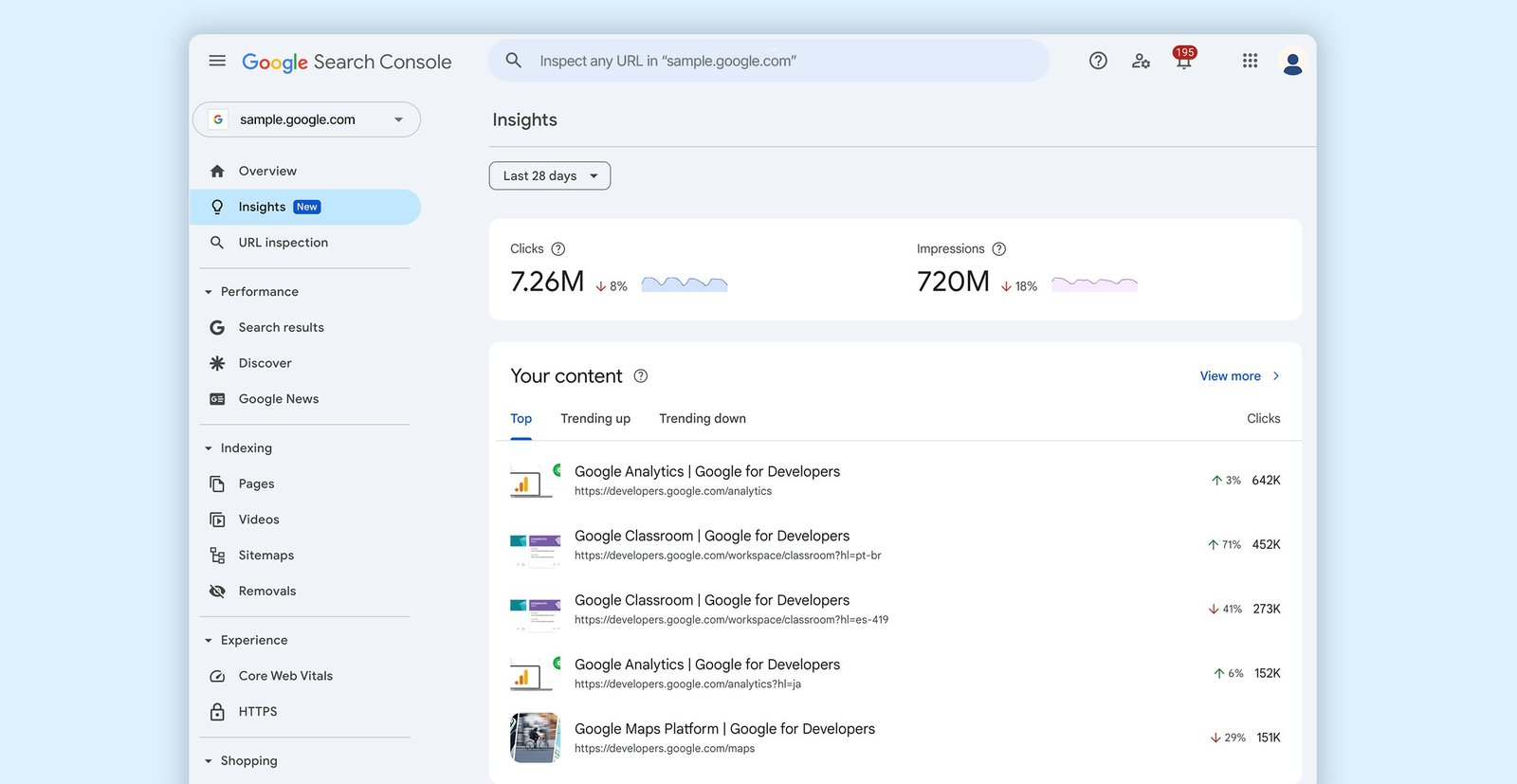
On-page SEO is where the search topic and the actual page need to line up.
An audit can review whether important pages have unique titles and meta descriptions, whether headings describe the content accurately, and whether the page provides enough useful information for its intended query.
It is also worth checking for missing or duplicated metadata, weak internal linking, poor image alt text, awkward keyword repetition and pages competing for the same search intent.
Tips: Optimize pages for clarity first. Titles, headings and descriptions should accurately explain the page rather than forcing keywords into places where they don't read naturally.
Keyword research should not be treated as permanent. Search behaviour can shift, new competitors can enter a market and the type of page people expect for a query can change.
For example, a keyword that once produced mostly informational articles may later show service pages, local businesses or comparison content.
An SEO audit gives a business an opportunity to review whether its existing page still matches the intent behind the search.
The goal is not to add more keywords. It is to make sure the right page is answering the right question for the right audience.
Tips: Before rewriting a page around a keyword, check what type of content currently appears for that search. Matching search intent is usually more important than simply increasing keyword frequency.
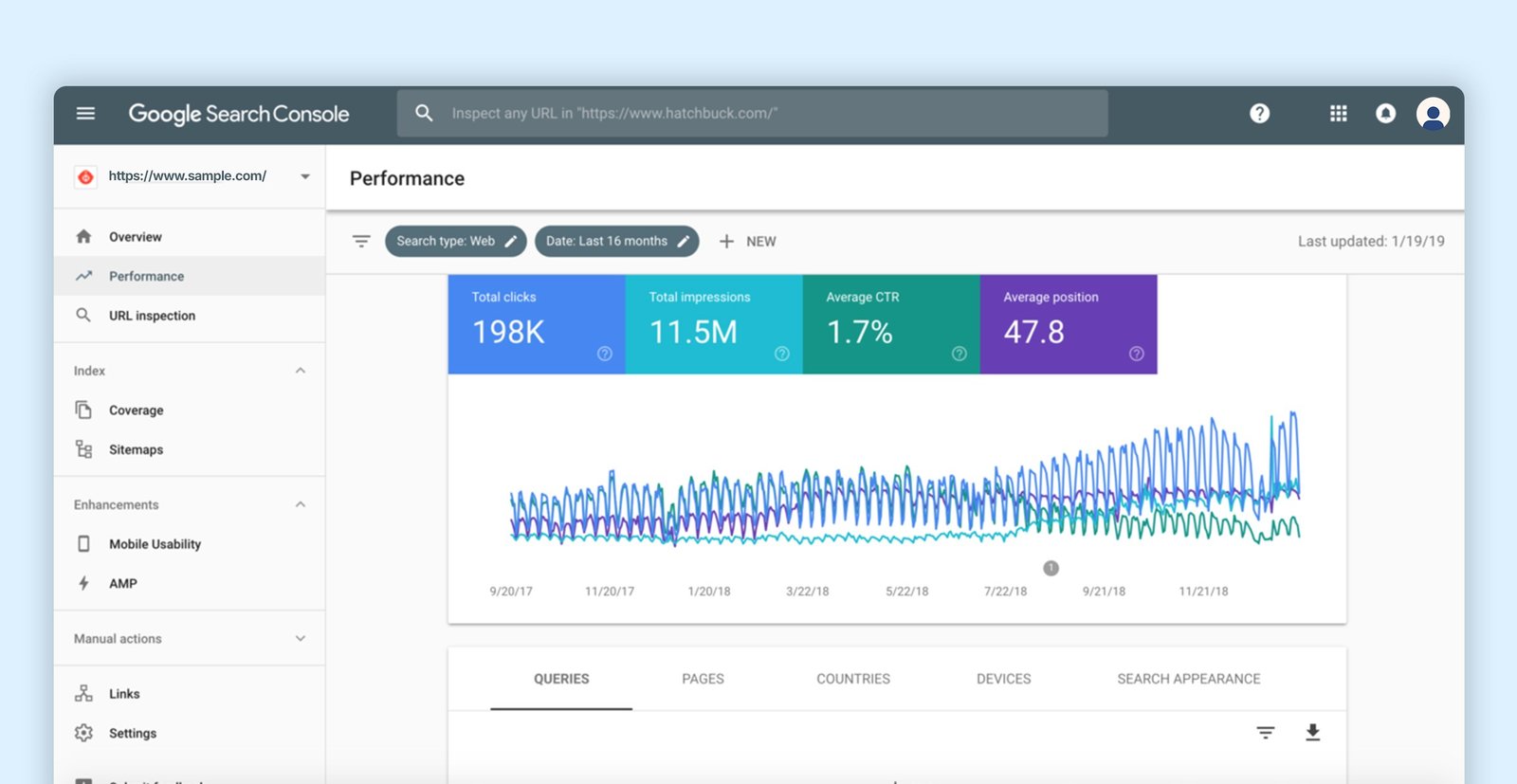
Technical SEO issues can remain unnoticed because they are not always visible on the front end.
A website may appear normal while important pages have indexing problems, incorrect canonical signals, missing metadata, status-code errors or other structural issues.
For websites that are regularly updated, technical checks become especially useful after redesigns, migrations, major plugin or platform changes, new page templates and URL restructuring.
Tips: Always perform an SEO check after a website migration or redesign. A visually successful launch can still introduce indexing, redirect or canonical problems behind the scenes.
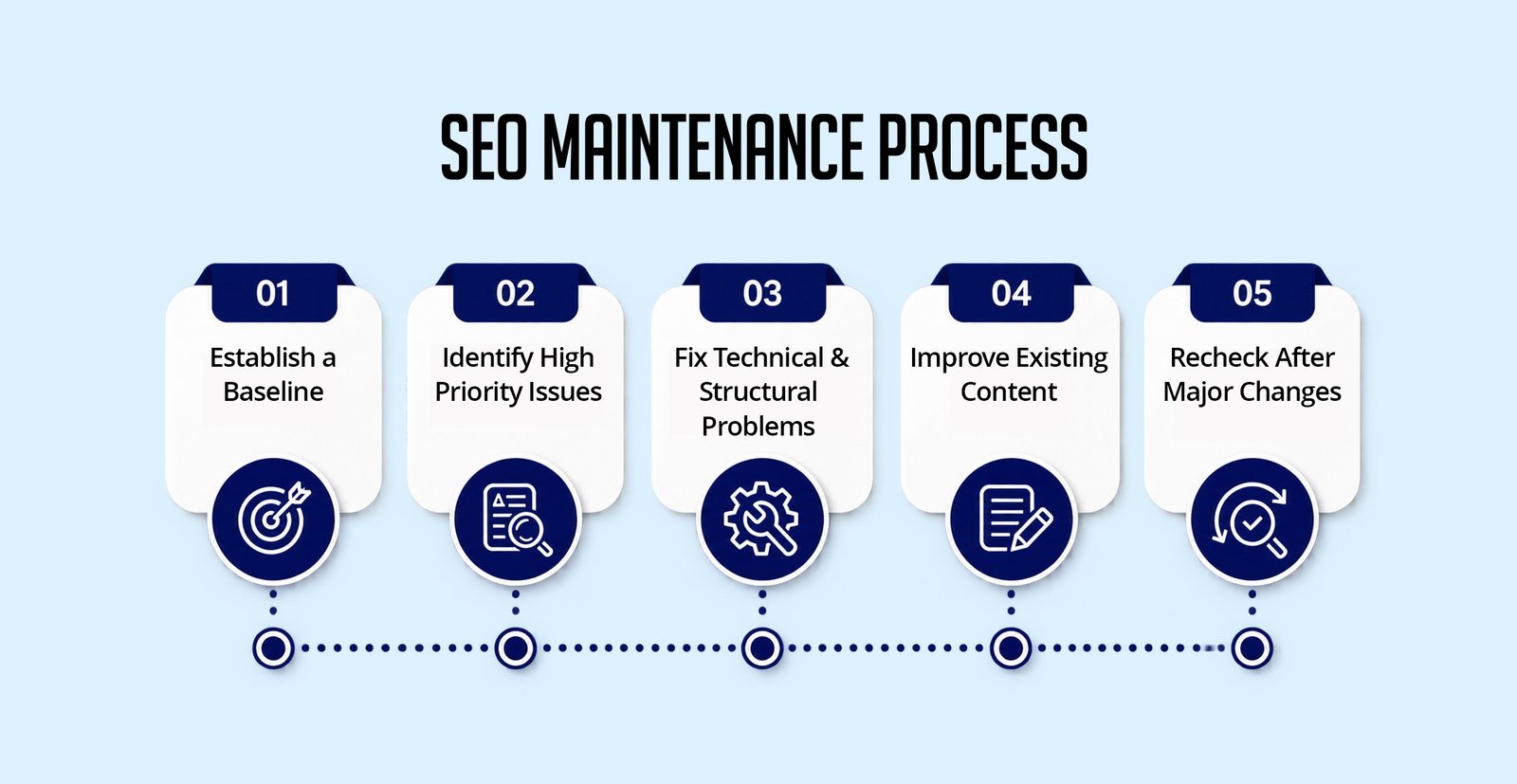
1. Establish a Baseline
Start by understanding the current state of the website: important pages, organic visibility, technical health, content coverage and existing SEO priorities.
2. Identify High-Priority Issues
Not every issue deserves the same attention. Prioritize problems that affect important pages, indexability, usability, conversions or the website's ability to communicate its target topics clearly.
3. Fix Technical and Structural Problems
Address broken links, incorrect redirects, indexing problems, metadata issues, weak internal linking and other technical findings that have a clear business or search impact.
4. Improve Existing Content
Refresh pages where information is outdated, search intent has changed or the content does not sufficiently answer the user's query.
5. Recheck After Major Changes
After a redesign, migration or major content update, revisit the affected sections rather than assuming the previous SEO setup remains unchanged.
Tips: Fix high-impact issues first. A prioritized list of ten meaningful improvements is usually more useful than trying to address hundreds of low-impact audit warnings at once.
SEO works best when it is connected to the wider digital presence of a business. Agyle Studio combines creative services, web development and digital marketing to help businesses approach their online presence as a connected system.
For businesses in Chandigarh, Mohali, Panchkula and Zirakpur, this can include website-focused SEO, content planning, digital marketing, creative communication and web development support.
If your website has grown over time and you are unsure which SEO issues need attention first, a structured audit can provide a clearer starting point.
The goal should be practical: find meaningful problems, prioritize them and keep improving the website instead of treating SEO as a one-time project.
A website does not stay unchanged after it is launched. Content gets edited, pages are added, URLs move and technical settings evolve.
Regular SEO maintenance gives businesses a way to catch these changes and keep their website organized for both users and search engines.
Whether you are managing a local business in Chandigarh, a growing company in Mohali, or a brand serving Panchkula and Zirakpur, SEO should be treated as an ongoing process.
A well-planned audit can help you understand where the website stands and what deserves attention next.
If your website has not had a proper SEO review recently, Agyle Studio can help you identify practical opportunities across SEO, content, web development and digital marketing.
A structured approach can help uncover meaningful problems, prioritize improvements and build a stronger, better-maintained online presence.
Comments are closed