- Get 50% OFF Your First Consultation – Limited Time Offer!

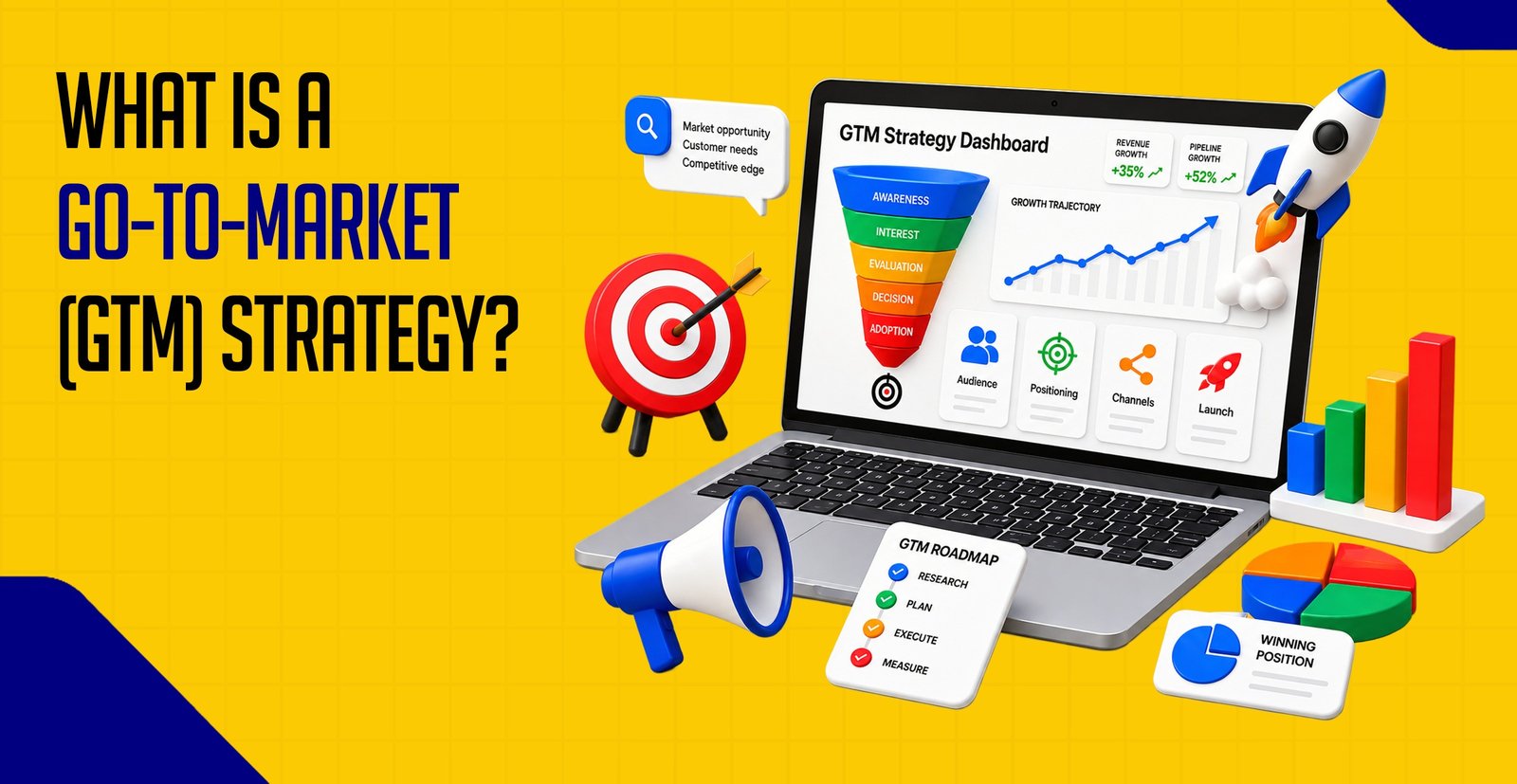
Quick Summary :- A Go-To-Market or GTM strategy is a structured plan for taking a product or service to the right market. It helps businesses define their audience, understand customer problems, create a clear value proposition, choose pricing and marketing channels, build a sales process, and measure performance before and after launch.
Launching a new product or service is not just about having a great idea. You also need to know who your customers are, what they need, and how you will reach them.
This is where a Go-To-Market (GTM) strategy helps.
A GTM strategy is a plan that explains how a business will introduce its product or service to the right audience and turn potential customers into buyers.
Whether you're launching a new product, starting a business, or entering a new market, a clear GTM strategy can help you make better marketing and business decisions.
A Go-To-Market strategy is a step-by-step plan for bringing a product or service to the market.
In simple terms, it answers five important questions:
A GTM strategy brings your marketing, sales, positioning, pricing, and customer targeting together.
Tips: A good GTM strategy puts the right product in front of the right customer at the right time.
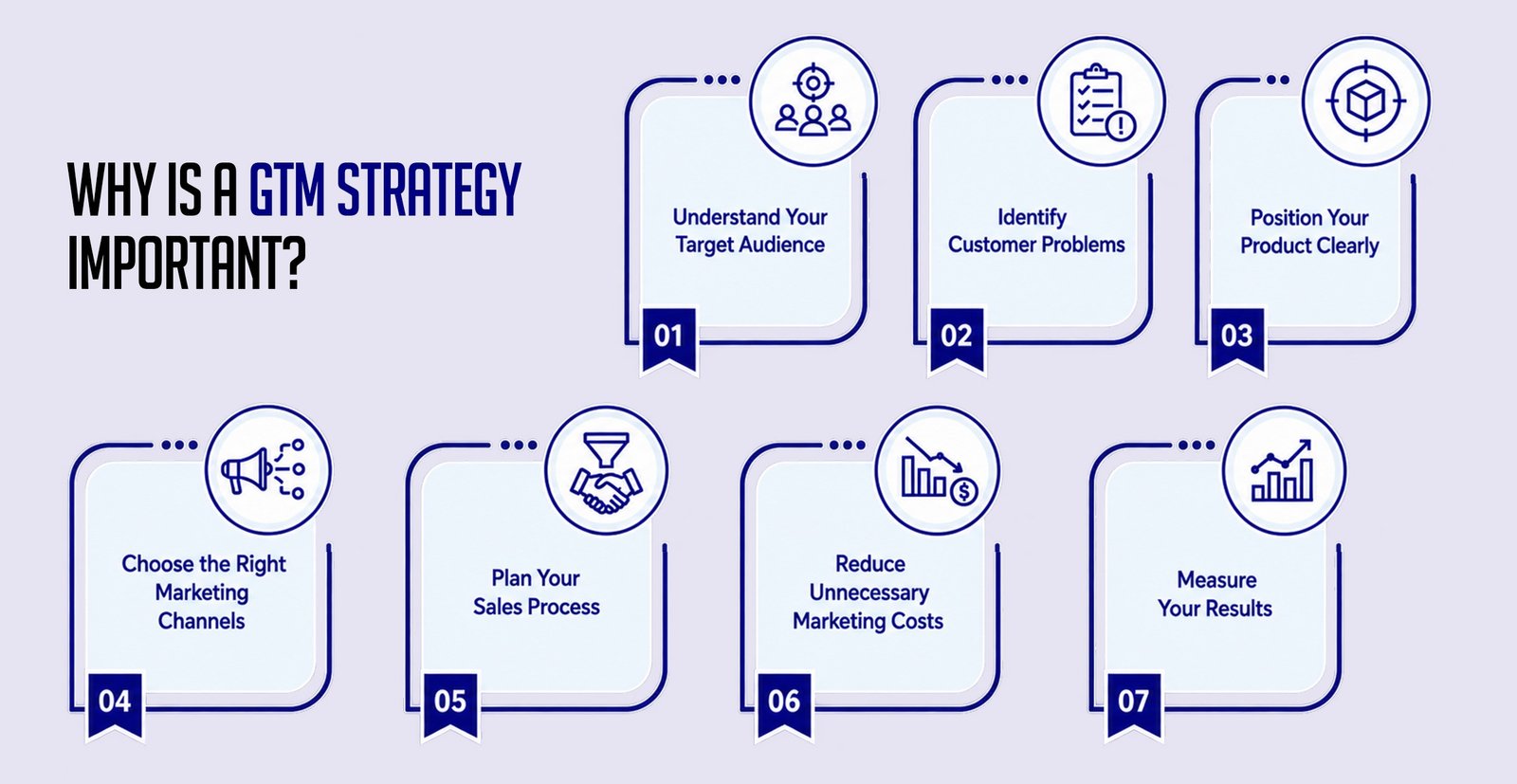
Without a proper plan, businesses can spend a lot of time and money reaching people who may not actually need their product or service.
A GTM strategy helps you:
It gives your launch a clear direction instead of relying on guesswork.
Tips: Before spending on marketing, make sure you can clearly explain who the product is for, what problem it solves, and why someone should choose it over alternatives.
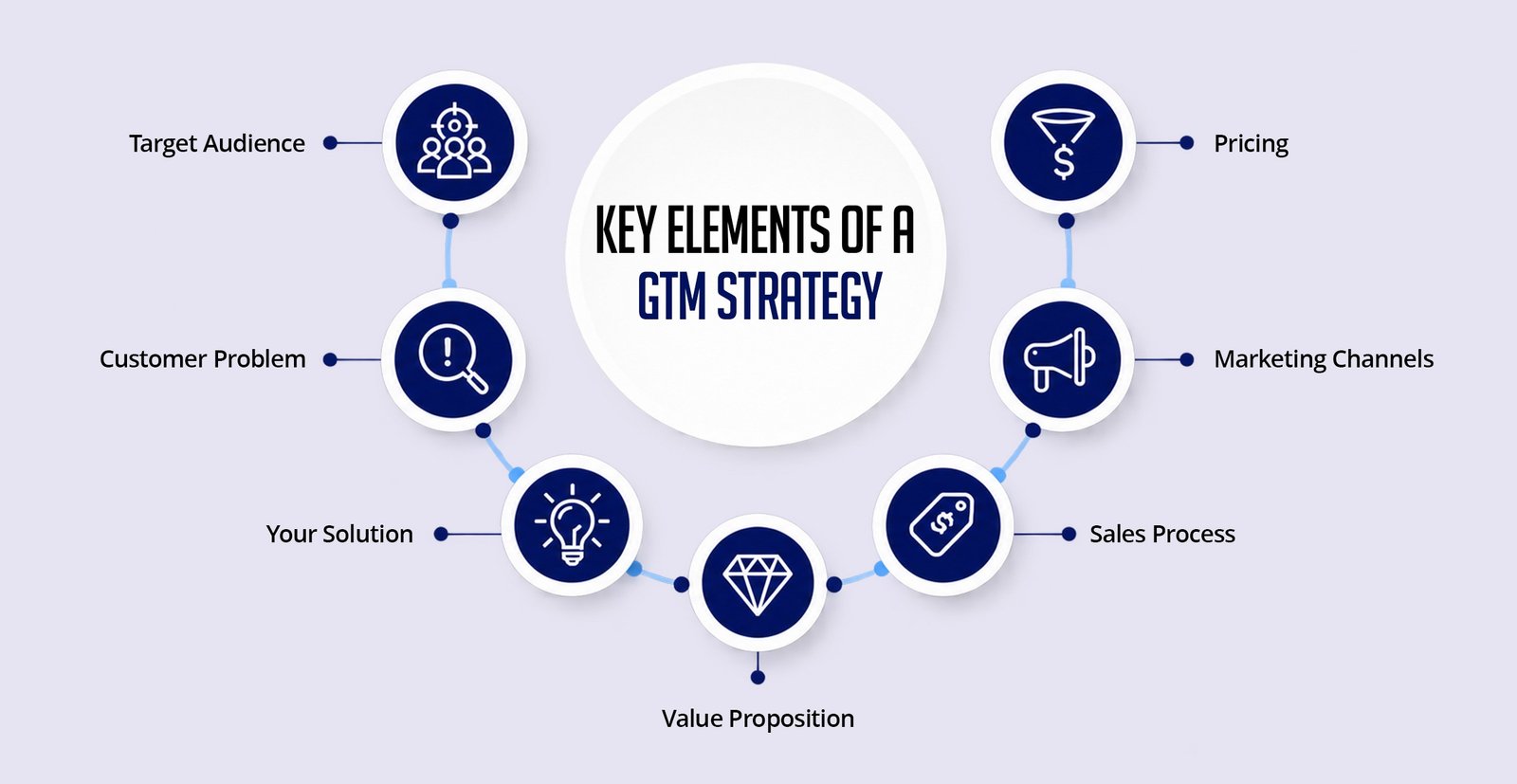
A simple GTM strategy usually includes these important elements:
1. Target Audience
First, understand who your ideal customer is.
Consider their:
The more specific your audience, the easier it becomes to create relevant marketing.
2. Customer Problem
What problem does your customer have?
For example, a small business may struggle to generate enquiries through its website.
Understanding this problem helps you communicate your solution better.
3. Your Solution
Now explain how your product or service solves that problem.
Don't just focus on features. Explain the value customers will get from your offering.
4. Value Proposition
Your value proposition answers:
"Why should customers choose you?"
It should clearly explain what you offer and what makes you different.
5. Pricing
Decide how much customers will pay and which pricing model works best.
This could be:
6. Marketing Channels
Choose where you will reach your audience.
Depending on your business, this could include SEO, Google Ads, Social Media, Email Marketing, Content Marketing, or Influencer Marketing.
You don't need to be everywhere. Focus on the channels your customers actually use.
7. Sales Process
Finally, decide how an interested person becomes a customer.
For example: Google Search → Website → Enquiry → Sales Call → Customer
Tips: Keep every GTM decision connected to the customer journey. Your audience, message, channel, pricing and sales process should support each other instead of operating separately.
You can create a basic GTM strategy in 7 simple steps:
1. Research Your Market
Understand your industry, competitors, and customers.
2. Define Your Target Audience
Know exactly who you're trying to reach.
3. Identify the Customer Problem
Understand what your audience needs.
4. Define Your Solution
Show how your product or service solves that problem.
5. Create Your Positioning
Explain why customers should choose you.
6. Select Your Marketing Channels
Choose the platforms where your audience is most active.
7. Track and Improve
Measure results and make changes based on actual data.
Tips: Avoid building your entire GTM plan around assumptions. Use customer conversations, competitor research, campaign data and early market feedback to validate your decisions.
Let's say a company is launching a new project management software for small businesses.
Its GTM strategy could look like this:
Target Audience:
Small businesses with remote teams.
Problem:
Teams struggle to manage tasks and deadlines.
Solution:
One platform for managing projects and team communication.
Marketing:
SEO, Google Ads and LinkedIn.
Offer:
Free trial followed by a monthly subscription.
Customer Journey:
Ad → Website → Free Trial → Follow-up → Customer
This simple plan gives the company a clear direction before launching.
A GTM strategy and marketing strategy are related, but they aren't exactly the same.
Marketing strategy focuses mainly on how you attract and engage customers through channels such as SEO, social media, advertising and content.
GTM strategy is broader. It includes your target audience, positioning, pricing, marketing, sales and overall market-entry plan.
So, marketing is one part of a GTM strategy.
Tips: Don't confuse your media plan with your GTM strategy. Choosing Google Ads or Instagram is a channel decision; understanding who you are selling to and why they should buy is the GTM foundation.
A GTM strategy should be flexible. Your customer feedback and performance data should help you improve it.
Tips: Don't assume your first strategy will be perfect. Launch, measure, learn and improve.
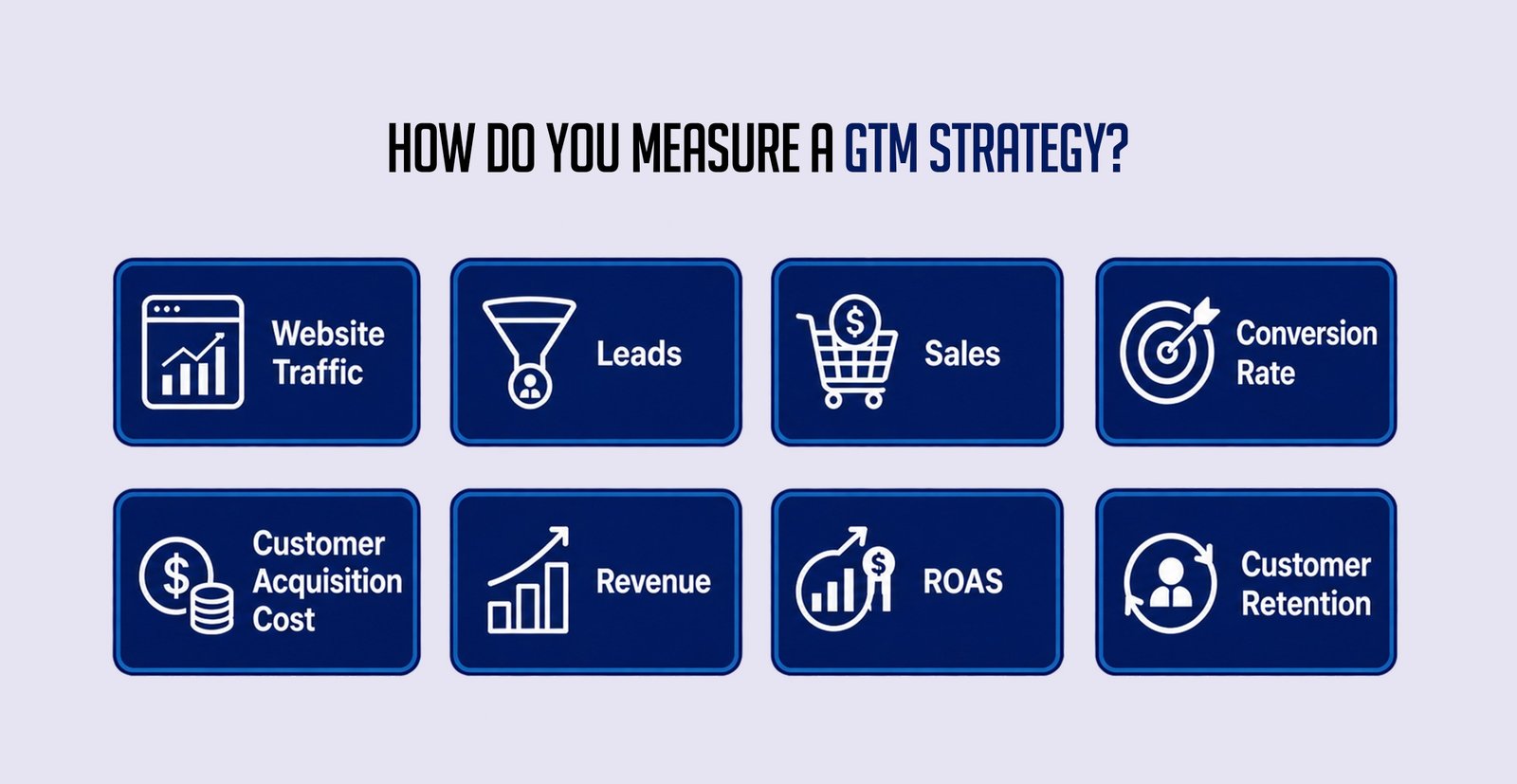
Your KPIs will depend on your business, but common metrics include:
The important thing is to measure metrics that connect directly to your business goals.
Tips: Avoid tracking only visibility metrics. Connect your GTM KPIs to actual business outcomes such as qualified leads, acquisition cost, conversion rate, revenue and retention.
A successful product needs more than good features. It needs the right audience, positioning and strategy behind it.
A Go-To-Market strategy helps businesses understand who they want to reach, what they want to offer, how they will reach customers, and how they will turn interest into sales.
Whether you're launching a new product, starting a business, or introducing a new service, a simple GTM plan can give your marketing a much clearer direction.
A strong GTM strategy connects your audience, positioning, brand, marketing channels and sales process before significant time and budget are invested in execution.
Agyle Studio can help businesses connect brand strategy, creative communication, digital marketing and web experiences into a more consistent market-entry approach.