- Get 50% OFF Your First Consultation – Limited Time Offer!

Quick Summary :- Customer journey mapping helps businesses understand the different steps, touchpoints, questions, and experiences a customer goes through when interacting with a business. A simple customer journey can include Awareness, Consideration, Decision, Purchase, and Retention. Mapping this journey can help identify customer problems, improve marketing and sales touchpoints, and create a better overall customer experience.
A customer doesn't usually decide to buy something the moment they first discover a business.
They may see a social media post, search on Google, visit the website, compare different options, read reviews, and then contact the business.
All these interactions are part of the customer journey.
Customer journey mapping helps businesses understand this journey from the customer's point of view. It shows what customers do, what they are looking for, what questions they have, and where they may lose interest.
In this blog, we will explain what customer journey mapping is, why it is important, and how businesses can create a simple customer journey map.
Customer journey mapping is the process of visually representing the steps a customer takes when interacting with a business.
It looks at the customer's experience across different touchpoints.
For example:
Google Search → Website → Social Media → Enquiry → Sales Call → Purchase → Follow-up
Each interaction is a touchpoint in the customer journey.
A customer journey map helps businesses understand what happens at each stage and identify opportunities to improve the experience.
Businesses often look at their marketing from their own point of view.
Customer journey mapping encourages you to look at the business from the customer's point of view.
It can help you understand:
This can lead to a better customer experience and a more effective marketing strategy.
A simple customer journey can be divided into five stages:
Awareness → Consideration → Decision → Purchase → Retention
Let's understand each stage.
Customer thought:
"I have a problem. I need a solution."
At this stage, the customer becomes aware of a problem, need, or desire.
They may search on Google, watch videos, browse social media, or hear about a business from someone else.
Example
A business owner realizes:
"Our website isn't generating enough enquiries."
They may then search:
"How to get more leads from a website"
Your blog, social media content, or advertisement could introduce your business to them.
Useful Marketing Channels
Customer thought:
"Which solution is right for me?"
The customer now understands the problem and starts researching possible solutions.
They may visit different websites, compare businesses, read reviews, and look at services or products.
Example
The business owner has found several digital marketing agencies.
Now they may compare:
At this stage, useful and trustworthy information can help your business stand out.
Useful Content
Customer thought:
"Which business should I choose?"
The customer has narrowed down their options and is close to making a decision.
This is where factors such as trust, pricing, communication, experience, reviews, and the overall customer experience can influence the final decision.
Example
The customer has shortlisted three agencies.
They may now:
Your job is to make the next step simple.
A clear CTA such as:
"Book a Consultation"
can help.
Customer thought:
"I'm ready to move forward."
The customer takes the desired action.
Depending on the business, this could mean:
The experience at this stage matters.
A complicated checkout process, unclear pricing, slow communication, or difficult paperwork can create unnecessary friction.
Customer thought:
"Was choosing this business the right decision?"
The customer journey doesn't necessarily end after the purchase.
Businesses need to continue providing value and maintaining a good experience.
This can include:
A satisfied customer may become a repeat customer or recommend your business to others.
A touchpoint is any interaction a customer has with your business.
Touchpoints can include:
Online Touchpoints
Offline Touchpoints
A customer may interact with a business through several touchpoints before making a decision.
Let's take the example of a customer looking for a digital marketing agency.
Awareness
Customer Action: Searches on Google
Customer Need: Understand the problem
Business Opportunity: SEO/blog content
Consideration
Customer Action: Visits websites
Customer Need: Compare agencies
Business Opportunity: Services/case studies
Decision
Customer Action: Contacts agency
Customer Need: Get answers
Business Opportunity: Consultation/CTA
Purchase
Customer Action: Signs agreement
Customer Need: Easy onboarding
Business Opportunity: Simple process
Retention
Customer Action: Works with agency
Customer Need: Good results/support
Business Opportunity: Reporting/follow-up
This simple table can already give a business useful insights into its customer journey.
Step 1: Define Your Customer
Start with a specific customer rather than trying to map everyone's journey.
Ask:
Step 2: List the Customer's Goals
At every stage, understand what the customer is trying to achieve.
For example:
Awareness: Understand the problem
Consideration: Find possible solutions
Decision: Choose the right provider
Purchase: Complete the process
Retention: Get value from the product or service
Step 3: Identify the Touchpoints
List all the places where customers interact with your business.
For example:
Google → Website → Instagram → WhatsApp → Sales Call → Service
This helps you understand how different marketing channels work together.
Step 4: Identify Customer Questions
Think about what customers might ask at each stage.
Awareness:
"What is the solution to my problem?"
Consideration:
"Which company should I choose?"
Decision:
"Can I trust this company?"
Purchase:
"How does the process work?"
Retention:
"Will I get the results I expected?"
Your marketing content should help answer these questions.
Step 5: Find the Problems
Look for areas where customers may experience friction.
For example:
These are opportunities for improvement.
Step 6: Improve the Customer Experience
Once you identify problems, decide what you can change.
Problem: Customer cannot easily find your services.
Solution: Improve website navigation.
Problem: Customers don't trust the business.
Solution: Add testimonials, reviews, case studies, and portfolio work.
Problem: Customers don't know what to do next.
Solution: Add clear calls to action.
These two concepts are related but not exactly the same.
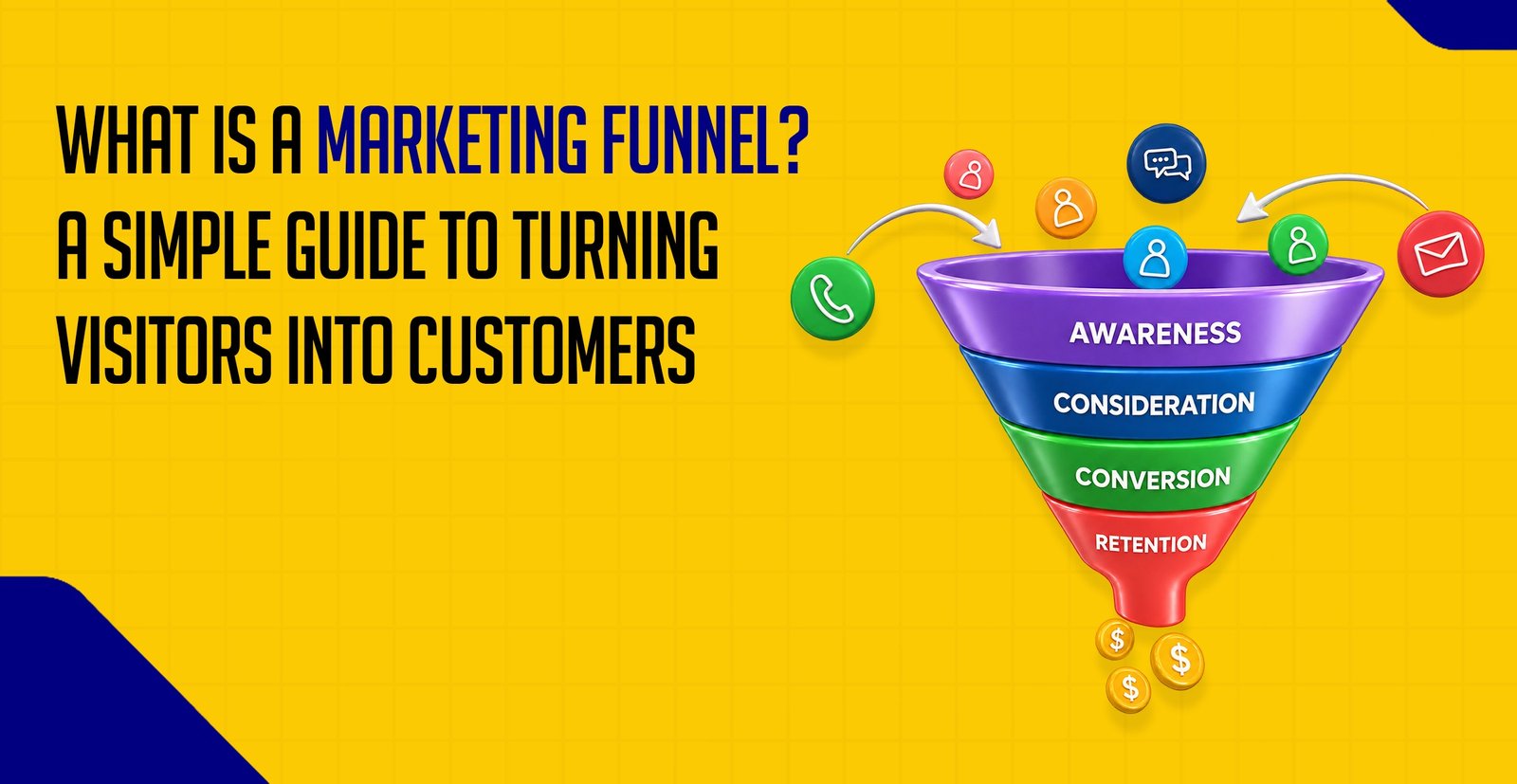
Marketing Funnel
Focuses on how potential customers move from:
Awareness → Consideration → Conversion → Retention
It is often used to plan marketing activities.
Customer Journey Map
Looks more closely at the customer's actual experience, including their questions, emotions, touchpoints, problems, and interactions.
In simple terms:
Marketing Funnel → How you move people toward conversion
Customer Journey Map → How the customer experiences the journey
Businesses can use both together.
Different marketing channels can support different parts of the journey.
SEO
Helps customers discover your business when searching for information or solutions.
Social Media
Helps create awareness and maintain engagement.
Google Ads
Can reach customers actively searching for products or services.
Content Marketing
Helps answer customer questions and build trust.
Email Marketing
Can help nurture leads and maintain relationships.
Website
Acts as a central point where customers can learn, compare, and take action.
Mapping Everyone as One Customer
Different customer groups can have completely different journeys.
Start with a specific audience.
Focusing Only on Marketing
The customer experience also includes sales, support, delivery, onboarding, and after-sales service.
Ignoring Customer Feedback
Your assumptions may not always match what customers actually experience.
Use reviews, feedback, surveys, sales conversations, and support questions to understand the real journey.
Creating the Map and Never Using It
A customer journey map should lead to action.
Use it to identify areas that need improvement.
Focusing Only on the Purchase
The relationship with the customer continues after the purchase.
Retention and customer satisfaction are also important.
You can follow this simple process:
Define Your Customer
↓
Understand Their Goal
↓
List Their Touchpoints
↓
Identify Questions & Problems
↓
Find Drop-Off Points
↓
Improve the Experience
↓
Measure the Results
Customer journey mapping helps businesses stop looking at marketing only from the company's perspective.
Instead of asking:
"How do we sell our product?"
you start asking:
"What is the customer experiencing at every step?"
That change in perspective can help improve your website, content, advertising, sales process, customer service, and overall marketing strategy.
A successful customer journey is not just about getting someone to buy.
It is about making the entire process clear, useful, trustworthy, and easy for the customer.