- Get 50% OFF Your First Consultation – Limited Time Offer!

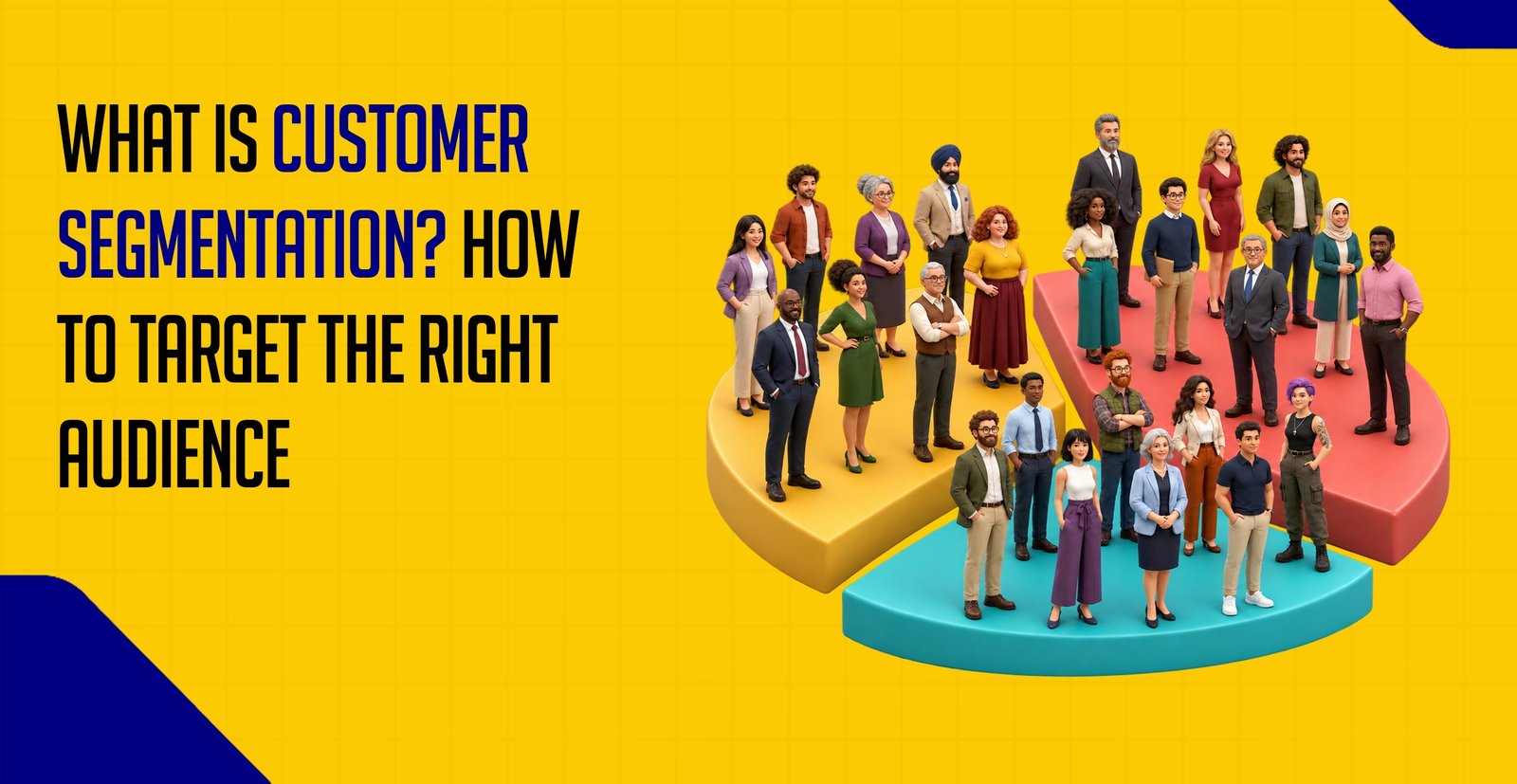
Quick Summary :- Customer segmentation is the process of dividing customers or potential customers into smaller groups based on shared characteristics, needs, interests, or behaviours. Businesses can use demographic, geographic, psychographic, behavioural, and B2B segmentation to create more relevant marketing messages and reach the right audience more effectively.
Not every customer has the same needs, interests, budget, or buying behaviour. Yet many businesses use the same marketing message for everyone.
Customer segmentation helps businesses divide their audience into smaller groups based on shared characteristics or behaviours. This makes it easier to create more relevant marketing campaigns and communicate with the right people.
Instead of trying to reach everyone with the same message, businesses can create targeted campaigns for specific customer groups.
Customer segmentation is the process of dividing customers or potential customers into smaller groups based on common characteristics.
These characteristics can include:
For example, a clothing brand may divide its customers into groups such as men, women, students, working professionals, and frequent buyers.
Each group can then receive marketing messages that are more relevant to them.
Customer segmentation can help businesses improve their marketing in several ways.
Reach the Right Audience
Instead of spending your marketing budget on a broad audience, you can focus on people who are more likely to be interested in your product or service.
Create More Relevant Messages
Different customers may have different priorities. Segmentation allows you to adjust your message according to each group's needs.
Improve Customer Experience
Customers are more likely to respond positively when the content, offers, and communication are relevant to them.
Improve Marketing Performance
Better targeting can help businesses make more informed decisions about their advertising, content, offers, and communication.
There are several common ways to segment customers.
1. Demographic Segmentation
This divides customers based on characteristics such as:
Example: A fitness brand may promote different plans to college students and working professionals.
2. Geographic Segmentation
Customers are divided based on their location.
This can include:
Example: A restaurant in Chandigarh may target customers specifically within nearby areas instead of advertising across the entire country.
3. Psychographic Segmentation
This focuses on customers' interests, lifestyles, values, and preferences.
For example:
This type of segmentation can help businesses create marketing messages based on what their audience cares about.
4. Behavioural Segmentation
This is based on how customers interact with your business.
Examples include:
For example, an e-commerce business could show a different offer to a first-time visitor and a returning customer.
5. B2B Customer Segmentation
For B2B businesses, customers can also be segmented by:
For example, a digital marketing agency may create separate campaigns for startups, local businesses, and established companies.
Imagine a digital marketing agency wants to promote its services.
Instead of creating one campaign for everyone, it could create segments such as:
Startups
Build your online presence from the beginning.
Local Businesses
Generate more local leads through digital marketing.
E-commerce Brands
Increase online sales with performance marketing.
Established Businesses
Improve your existing marketing performance.
The service may be similar, but the message and offer can be adjusted according to the audience.
1. Define Your Target Audience
Start by understanding who your customers are.
Look at:
2. Collect Relevant Data
Use available customer and marketing data from sources such as:
Only collect and use data appropriately and in line with applicable privacy requirements.
3. Identify Common Patterns
Look for similarities between customers.
For example:
Location: Chandigarh, Mohali, Panchkula
Customer type: Startup, SME, enterprise
Behaviour: New visitor, returning visitor, previous customer
These patterns can help you create useful segments.
4. Create Relevant Marketing Messages
Once you have your segments, create content and offers that address the needs of each group.
5. Measure the Results
Compare how different segments respond to your marketing.
Look at metrics such as:
Use the results to improve your segmentation and campaigns.
Customer segmentation can be used across different digital marketing channels.
SEO
Create content around different customer needs and search intents.
Google Ads
Create campaigns or ad groups around relevant audiences, products, services, or search themes.
Meta Ads
Use available audience and campaign targeting options to reach relevant customer groups.
Email Marketing
Send different messages based on customer interests, behaviour, or purchase history.
Social Media
Create content that speaks directly to different audience groups.
These terms are related but not exactly the same.
Target audience refers to the broader group of people you want to reach.
Customer segmentation divides that audience into smaller groups with shared characteristics.
For example:
Target Audience: Small businesses in Punjab
Segments:
This allows you to create more specific campaigns for each group.
Creating Too Many Segments
If you create too many small groups, your marketing can become difficult to manage.
Using Irrelevant Data
Not every piece of customer information is useful. Focus on data that can actually improve your marketing decisions.
Treating Every Segment the Same
The purpose of segmentation is to understand differences between groups. Your messaging should reflect those differences where appropriate.
Not Updating Segments
Customer behaviour can change over time. Review your segments periodically and update them when needed.
Ignoring Customer Needs
Segmentation should not only be about demographic information. Understanding customer problems and motivations is often just as important.
You can follow this simple process:
Understand Customers
↓
Collect Data
↓
Identify Patterns
↓
Create Segments
↓
Create Targeted Messages
↓
Launch Campaigns
↓
Measure Results
↓
Improve
For example:
A web design agency may identify that its audience includes startups, local businesses, and e-commerce brands.
It can then create separate landing pages, advertisements, and content for each group rather than using one generic message.
Customer segmentation helps businesses move from "one message for everyone" to more targeted and relevant marketing.
When you understand who your customers are, what they need, and how they behave, you can create better campaigns and communicate more effectively.
The goal is simple: reach the right audience with the right message at the right time.
Comments are closed